When minutes at the trade desk can save days in Operations
At Gen10, it’s our goal to empower busy traders and operators to work more effectively by freeing them from tedious manual administration and by automating contract processing.
[...]

At Gen10, it’s our goal to empower busy traders and operators to work more effectively by freeing them from tedious manual administration and by automating contract processing.
[...]
Fiercer competition and wider access to more broadly available market data continue to erode profit margins for traders across a wide range of commodities. As the competitive advantage traders used to hold in having access to proprietary information or in gaining access to industry news sooner is diluted by its broader availability and distribution amongst more market players as a result of new transparency regulations and technology, it’s more important than ever to find new strategies to deliver profitability.
[...]
At Gen10, we believe that commodity management technology should help organisations manage operational risk to a far greater extent than many CTRM systems currently allow. We have been promoting the advantages of proactive operational risk through digital transformation for several years and so are delighted that 2019 was the year that operational risk was placed firmly on the industry agenda.
[...]
Commodity supply chains are under pressure. This is nothing new. But what is new is the scale of the challenges the industry is facing and the wide range of factors impacting on global commodities. From political uncertainty regarding trade tariffs, to changing consumer demand patterns and increased global competition, the price pressure is on the industry, who need to maintain their profitability in the face of shrinking margins.
[...]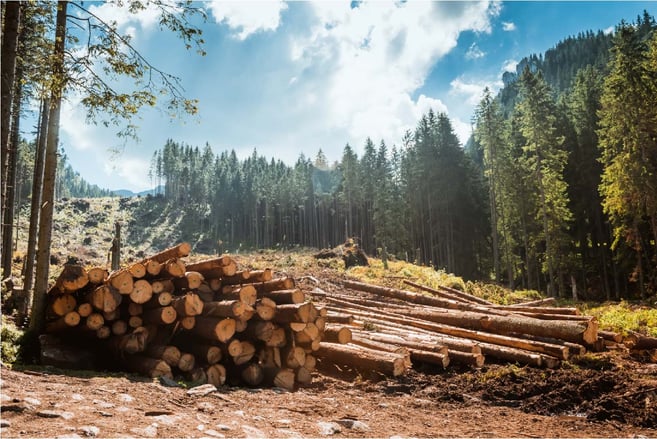
Environmental issues and climate change have played a larger role in the public consciousness in 2019 than possibly ever before. From Greta Thunberg’s Nobel Peace Prize nomination to the Extinction Rebellion protests that culminated in over 1,100 arrests in just one week in London, 2019 has been a year of climate activism. And within the biomass industry, where European subsidies in particular are closely linked to environmental issues and renewable energy targets, debate continues over how environmentally friendly biomass power generation really is.
[...]
In recent years, the metals CTRM debate has shifted away from “spreadsheet vs CTRM” as most organisations, even if they are not already using the technology, understand at least some of the benefits of efficient, process-automating commodity management technology.
[...]
In both personal and business environments, cloud computing is already everywhere. If you have watched Netflix, asked Siri a question or played music on an Amazon Alexa device, you have taken advantage of the speed and flexibility of cloud computing. The cloud offers businesses many benefits compared to traditional, on premise IT solutions, including scalability, business continuity and more flexible access. Yet despite these (and other) benefits, not all CTRM providers offer a cloud solution.
[...]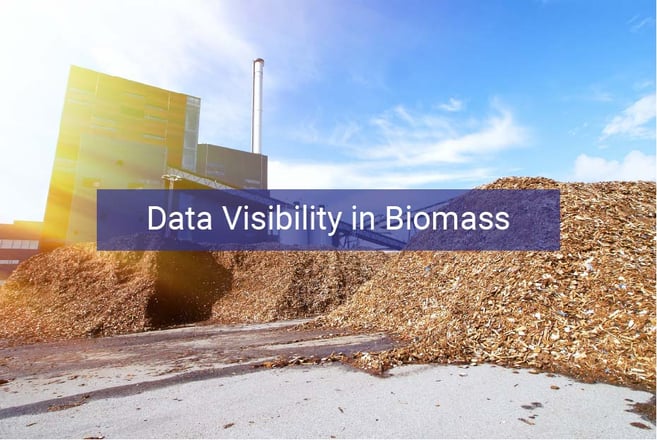
Demand for biomass energy generation continues to rise sharply. The use of bioenergy for electricity grew by 98% between 2008 and 2015, and the market for wood pellets in particular is expected to grow to $6150 million by 2024, up from $4120 in 2019. This provides many opportunities for biomass and energy traders, but it does also mean that the challenges the industry faces are changing as well. From increasing regulation to new players and changing market mechanisms, biomass companies need to be prepared to meet these new challenges as well as capitalise on new opportunities.
[...]
In concentrates trading (and indeed, trading for any commodity that includes quality premiums and discounts), managing assays and translating these into accounting and audit procedures are often some of the most difficult manual processes. Whilst this represents a challenge, it also means that these are the areas of opportunity where businesses could make some of the greatest operational improvements.
[...]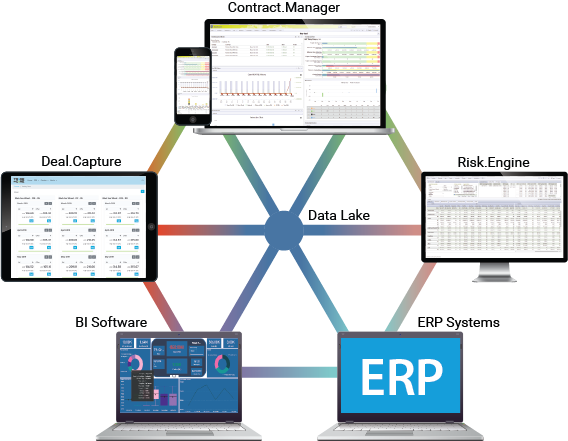
Reducing operational risk, improving reporting & compliance and bringing operating costs down are some of the most important challenges faced by organisations across the biomass-to-bioenergy supply chain.
[...]